

Meeting the Dragon
There is a particular threshold we encounter in the landscape of myth and fairy tale: the moment when we meet the dragon.
It is the place in the story where the journey changes. Until now, we may have been traveling through the known world, even if the path has been difficult. We have left home, crossed a boundary, entered the forest, endured a loss, or been cast into circumstances we did not choose. But eventually we arrive at the place where something stands before us that cannot simply be walked around. The way forward requires an encounter.
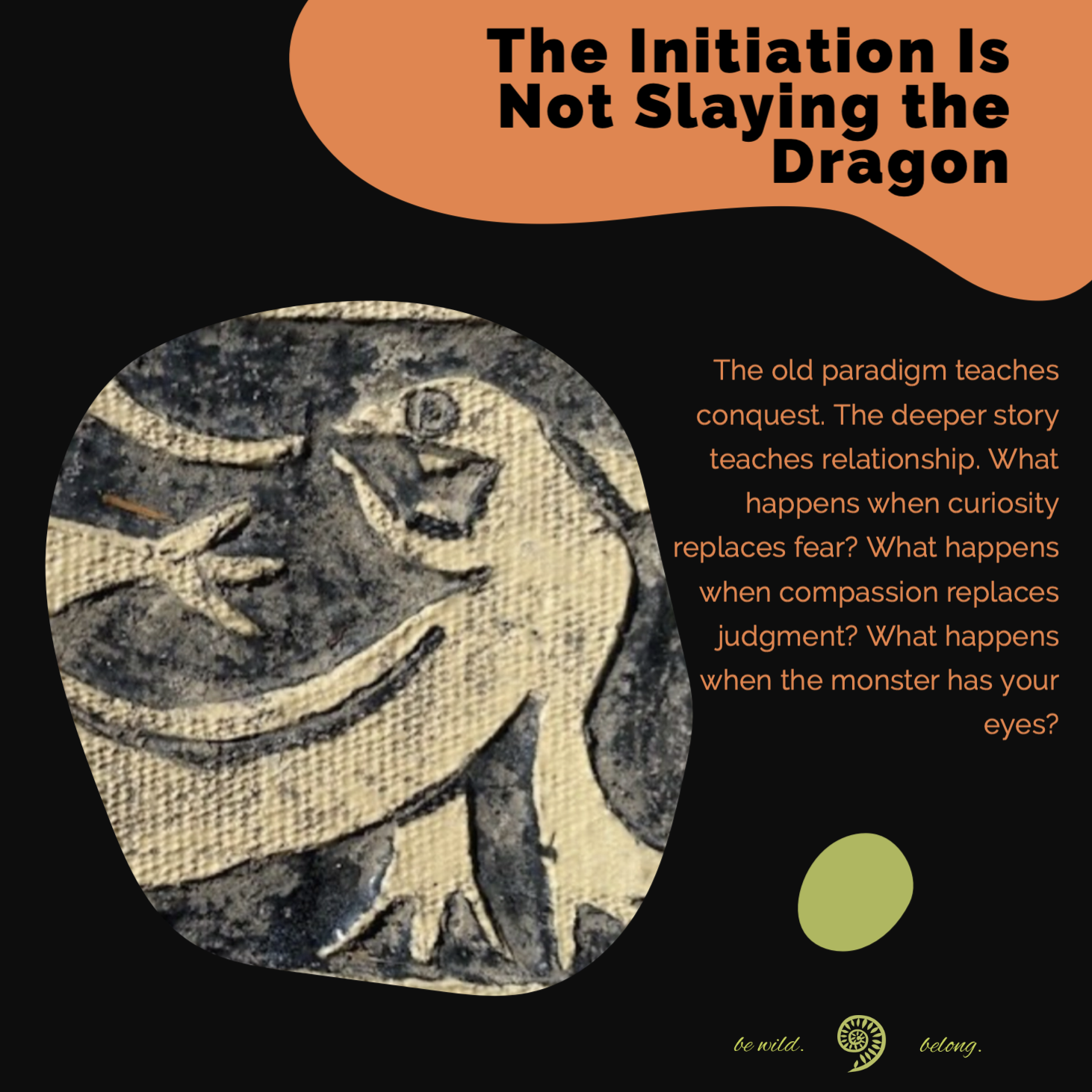
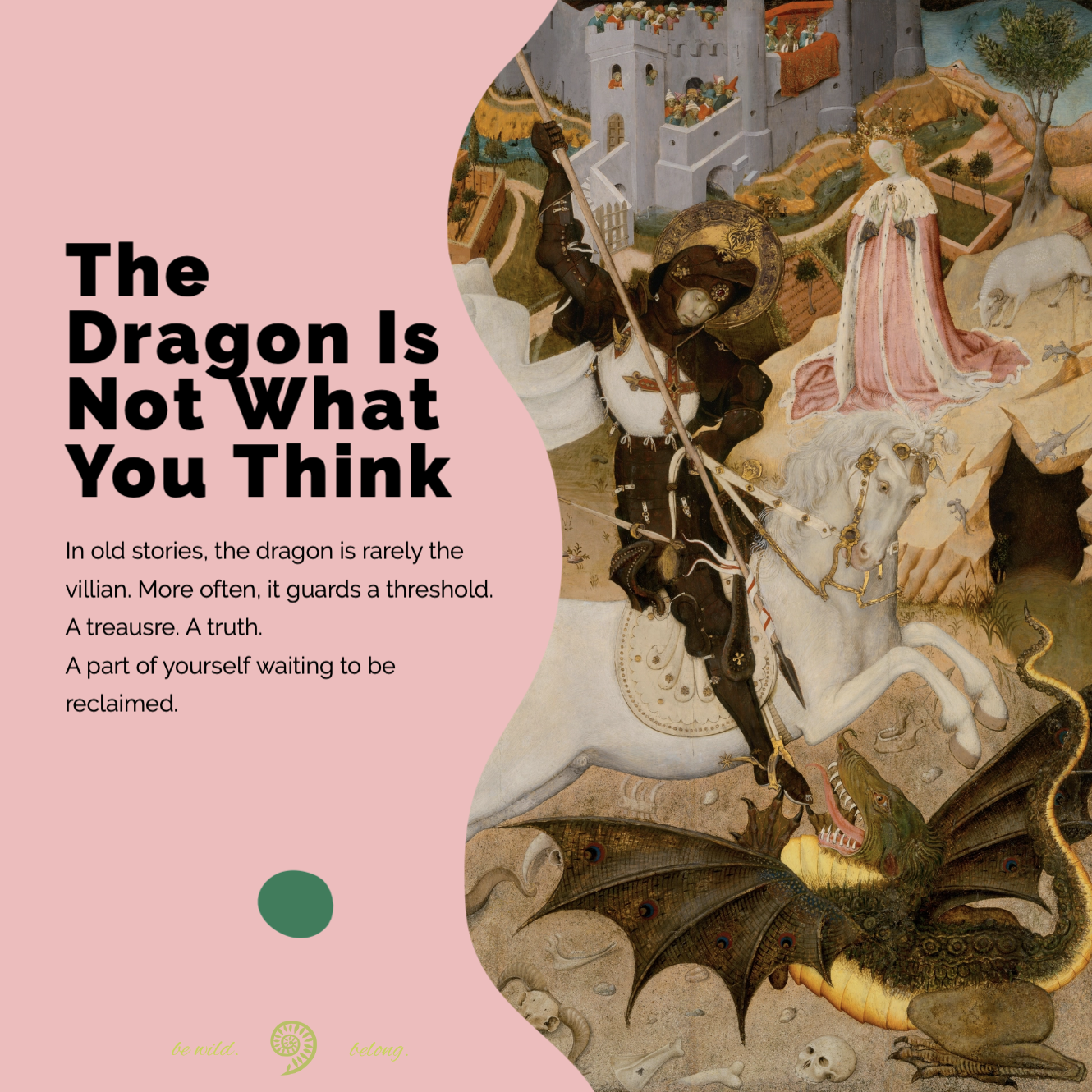
In the old stories, the dragon is often understood as the thing that must be overcome. It is the creature guarding the castle, the cave, the maiden, or the hoard of gold. The hero gathers courage, takes up the sword, and sets out to slay the beast. We have inherited much from this heroic imagination, including the tendency to understand the difficult and frightening things in our lives as adversaries that must be conquered before we can move on.
And yet, when we linger with the stories, another possibility begins to emerge.
The dragon is often guarding something precious.
The treasure is not simply sitting in the open, waiting to be collected. It is held behind the threshold, and the dragon is the one who keeps watch. This changes the nature of the encounter. What if the dragon is not merely an obstacle to the treasure, but part of the mystery of how the treasure is protected? What if we cannot receive what is waiting for us without first developing the capacity to meet what frightens us?
This year, we are traveling alongside The Handless Maiden as our guide story. Interestingly, there is no obvious dragon in her tale. There are no scales or wings, no creature breathing fire at the entrance to a cave. And yet, as with all great stories, the dragon is there if we learn to look beyond the literal surface of the tale.
This is one of the gifts of myth: it teaches us another way of seeing.
A story can become a landscape in which our own lives begin to reveal themselves. The forest in a fairy tale can become the forest of the psyche, but it can also remain an actual forest, alive with its own presence and intelligence. The wound of the Handless Maiden can speak to those places in us where our capacity to act, create, touch, or participate in the world has been severed. Her exile can illuminate the experience of finding ourselves outside the structures of belonging we once depended upon. Her wandering can become a way of recognizing the strange and necessary seasons in which the old life has fallen away before the new one has revealed itself.
Myth does not ask us to choose between these levels of meaning. It invites us to inhabit them simultaneously.
And so we can begin to ask: where is the dragon in this story?
Perhaps the dragon is not a character at all. Perhaps it is the threshold itself—the place where the Handless Maiden must encounter what has become of her and what the world has become without the life she once knew. Perhaps the dragon is the terror of entering a future for which she has no map. Perhaps it is the profound grief of discovering that she cannot return to who she was before.
And perhaps this is where the story begins to meet us.
Because we each have our dragons.
They do not always announce themselves as dragons. They may appear as the fear we have organized our lives around, or as a story about ourselves that we have carried for so long that we no longer recognize it as a story. They may live in the places where we have learned to make ourselves smaller in order to belong, or in the parts of ourselves we have exiled because they were too unruly, too tender, too desiring, too angry, too wild.
Sometimes the dragon takes the form of a truth we have known for a very long time but have not yet been willing to live.
The dragon may be found at the edge of a marriage, a vocation, an identity, a way of being in the world. It may arise when the familiar strategies that have kept us safe are no longer able to carry us forward. It may appear when something we have avoided begins to ask for our attention—not because it wishes to destroy us, but because something in us is ready to be reclaimed.
This is why I am increasingly interested in the dragon as threshold rather than enemy.
To meet the dragon is not necessarily to defeat it. It may mean turning toward the thing we have spent years avoiding and becoming curious about what it has been guarding. It may mean discovering that the anger we feared has been protecting a boundary, that the grief we resisted carries a depth of love, or that the wildness we were taught to suppress contains an intelligence our more civilized selves have forgotten.
The treasure may not be on the other side of the dragon after all.
Perhaps the treasure is within the encounter itself.
Perhaps what we call the dragon is part of the initiation.
There is something in the old stories that understands this better than our contemporary language of self-improvement often does. We are not simply trying to become happier, more productive, more confident versions of ourselves. There are thresholds in a human life that ask something much more mysterious of us. They ask us to relinquish an old way of knowing ourselves. They ask us to enter the forest without certainty about what we will find there. They ask us to allow what has been buried, forgotten, or exiled to become visible again.
The Handless Maiden knows something about this kind of journey.
Her story does not give us a formula for avoiding suffering, nor does it promise that every loss will be neatly restored. Instead, it takes us into the deeper territory of transformation, where the question is not simply how to get back what was lost, but what kind of person—and what kind of life—might become possible because we have crossed this particular threshold.
Perhaps this is why the dragon keeps appearing in our stories.
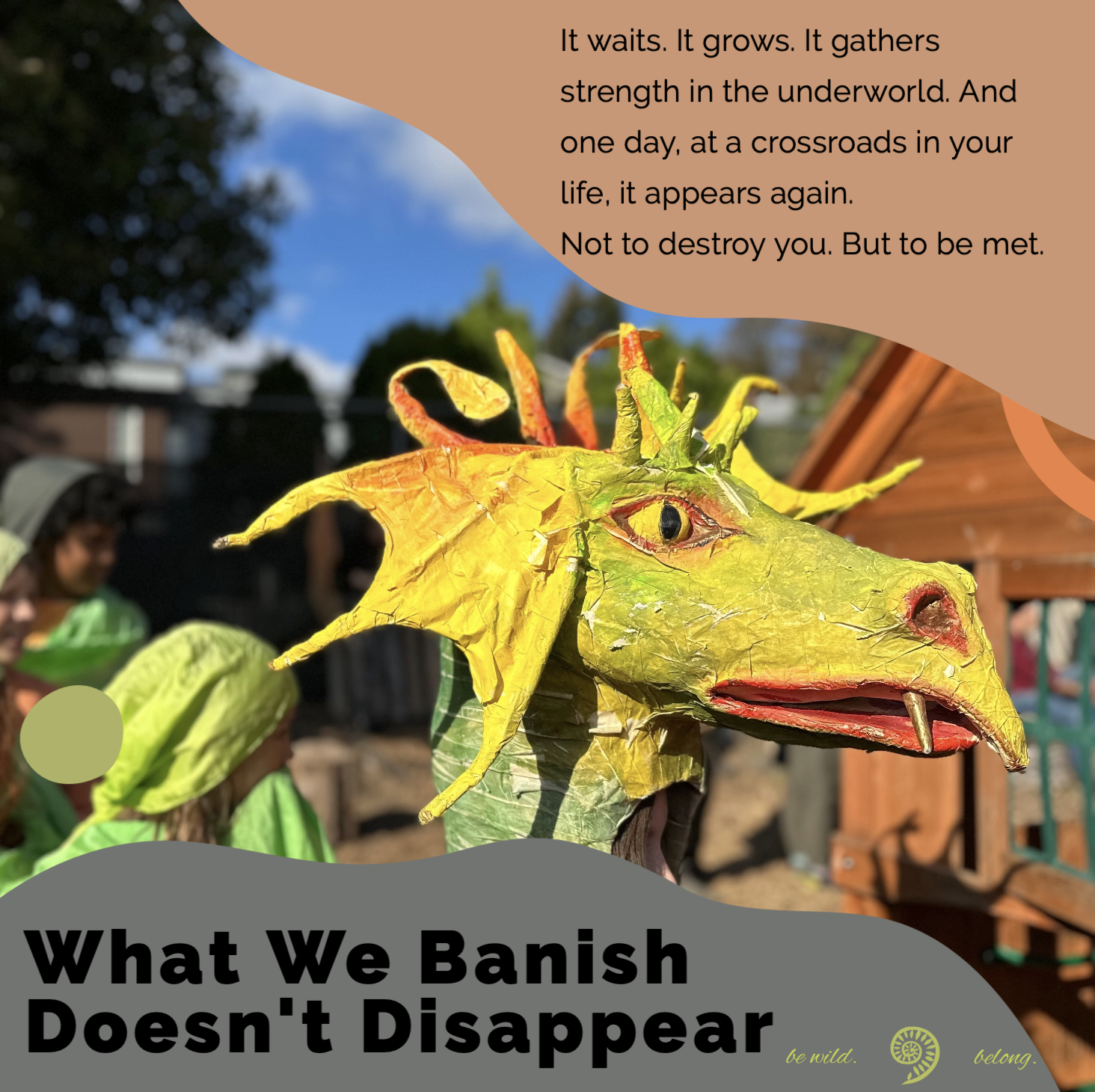
It waits at the place where the old self can no longer take us.
And perhaps when we finally arrive there, we might pause before reaching for the sword. We might look into the eyes of the creature that has been standing between us and the unknown and ask a different question:
What are you guarding?
What have I been afraid to see?
What part of myself have I left behind?
What treasure has been waiting here all along?
The work of myth is not to give us answers to these questions. It is to accompany us long enough that we become willing to ask them.
And sometimes, at the threshold, the dragon is the one who knows the way.